Resume downloaded.



A productivity analytics system that can aid intracking productivity and encourage balanced routines for peopleworking at home.
This case study explores how India’s film ratings can move beyond censorship to become cultural guidance for 1.4B viewers. It proposes a system-level redesign — spanning interface, policy, and curriculum — showing how design leadership can turn regulation into empowerment.
This case study explores how India’s film ratings can move beyond censorship to become cultural guidance for 1.4B viewers. It proposes a system-level redesign — spanning interface, policy, and curriculum — showing how design leadership can turn regulation into empowerment.

This case study explores how India’s film ratings can move beyond censorship to become cultural guidance for 1.4B viewers. It proposes a system-level redesign — spanning interface, policy, and curriculum — showing how design leadership can turn regulation into empowerment.
This case study explores how India’s film ratings can move beyond censorship to become cultural guidance for 1.4B viewers. It proposes a system-level redesign — spanning interface, policy, and curriculum — showing how design leadership can turn regulation into empowerment.





Problem
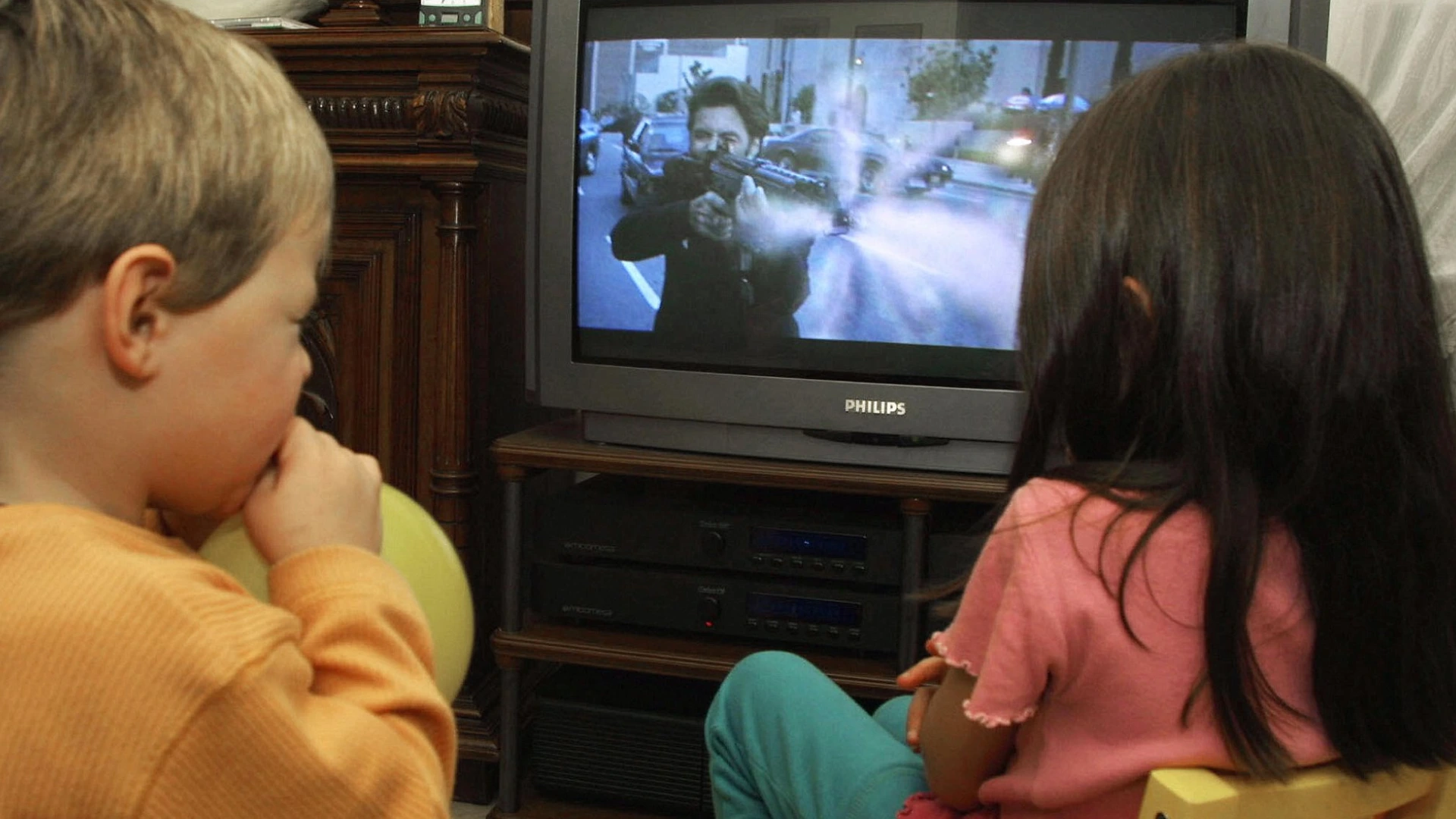
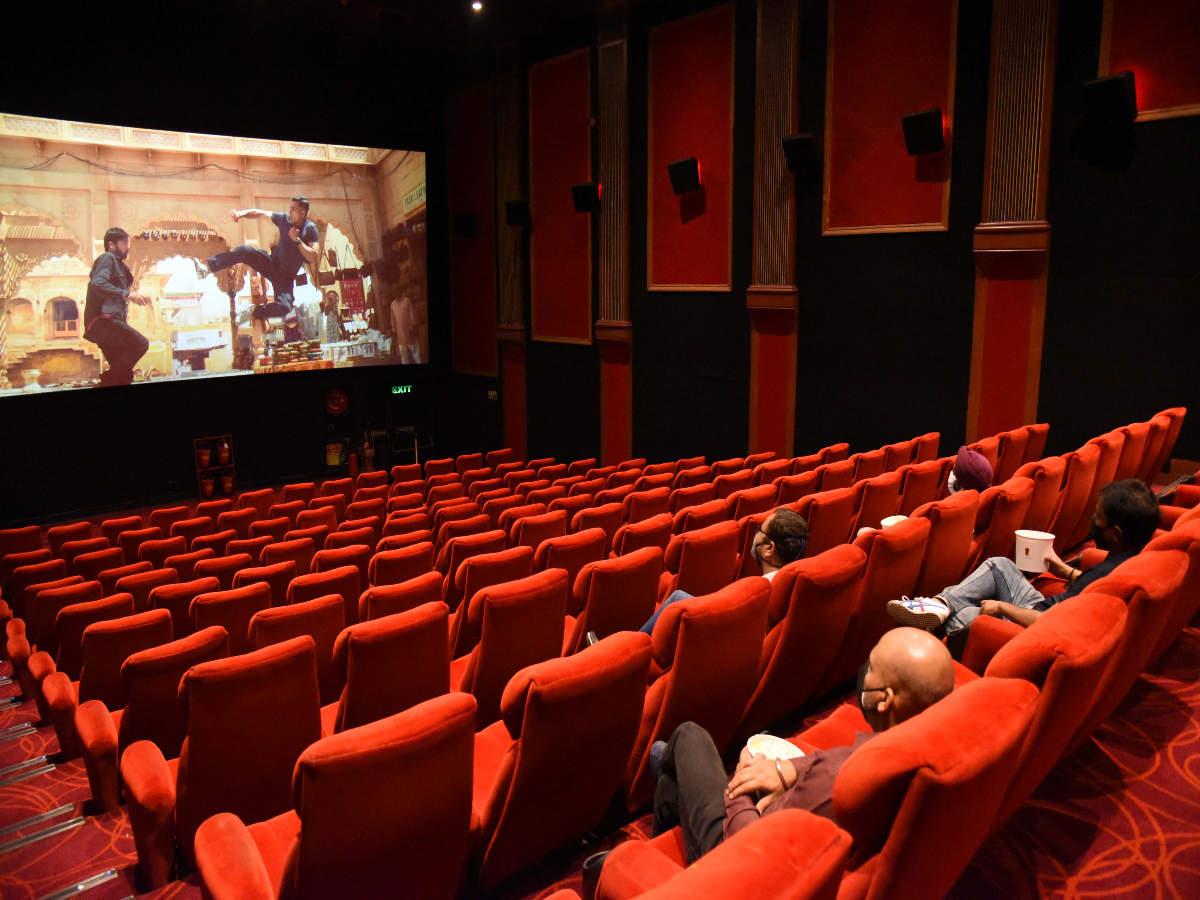
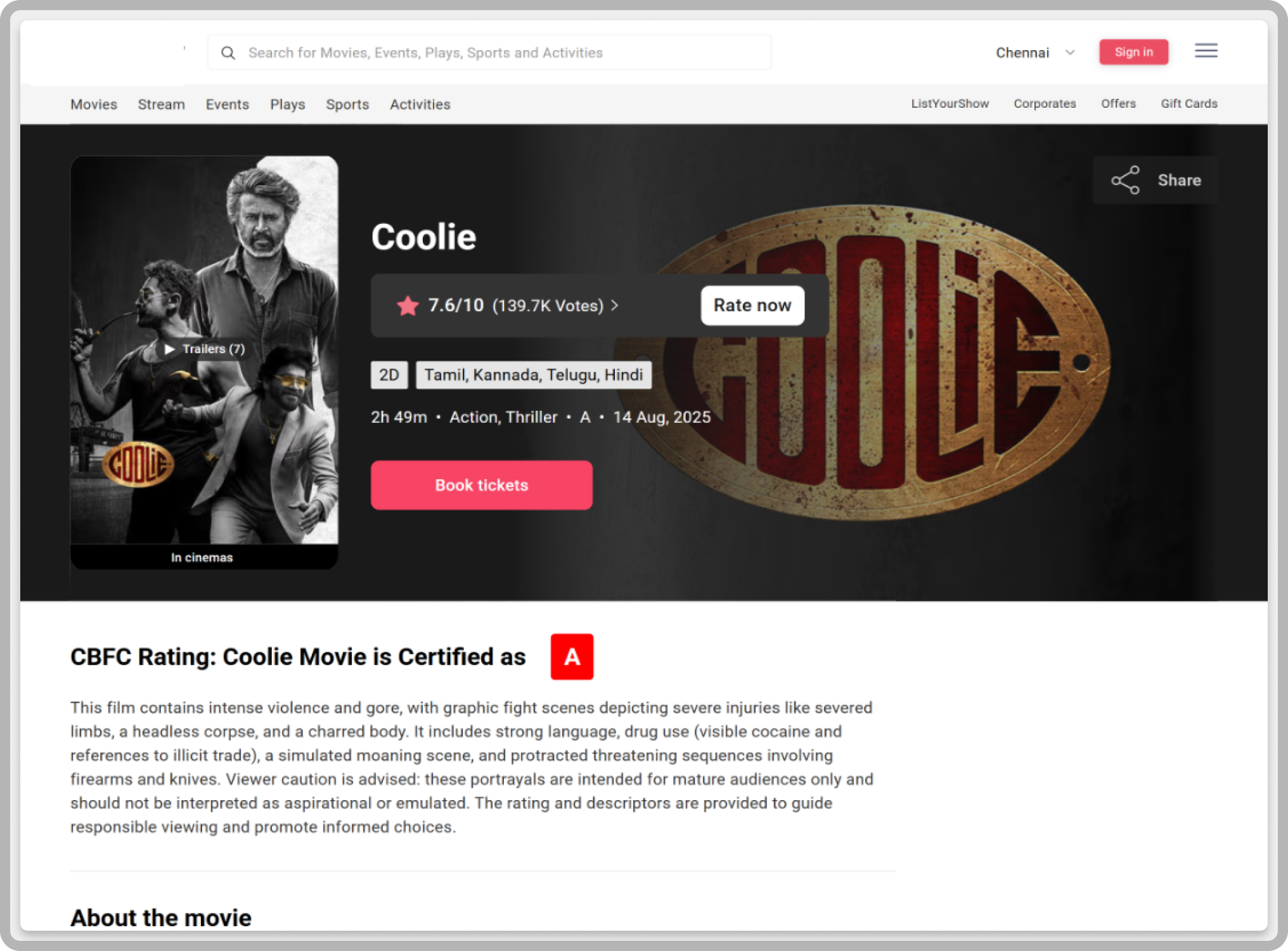
For young viewers still forming moral judgment and personal identity, repeated exposure to charismatic film protagonists who engage in “justified” violence can normalize aggression and frame emotional repression as a marker of strength, fostering unhealthy models of masculinity and interpersonal conduct. Drawing on Social Learning Theory (Bandura, 1977), such portrayals become behavioural templates as youth observe and internalize the rewarded actions of these role models. Cultivation Theory (Gerbner & Gross, 1976) suggests that persistent themes of vigilante justice and gendered violence create a symbolic environment where aggression is perceived as heroic and socially endorsed. Desensitization Theory further explains how aestheticized violence, as seen in films like Animal, KGF, and Pushpa, can dull emotional responsiveness and increase tolerance for aggressive solutions. While Reception Theory recognizes that audiences actively interpret media, the consistent glamorization of violence in these narratives exerts a strong shaping force on impressionable viewers, influencing their long-term beliefs and behavioural norms.
Methodology
To capture the complexity of this problem, I designed a triangulated mixed-methods study that combined:
Analysed 16 peer-reviewed studies and international rating frameworks. Applied Social Learning Theory, Cultivation Theory, Desensitization Theory, and Reception Theory to interpret findings.
Studied 13 high-grossing Indian films from Hindi, Tamil, Telugu, Malayalam, and Kannada industries.
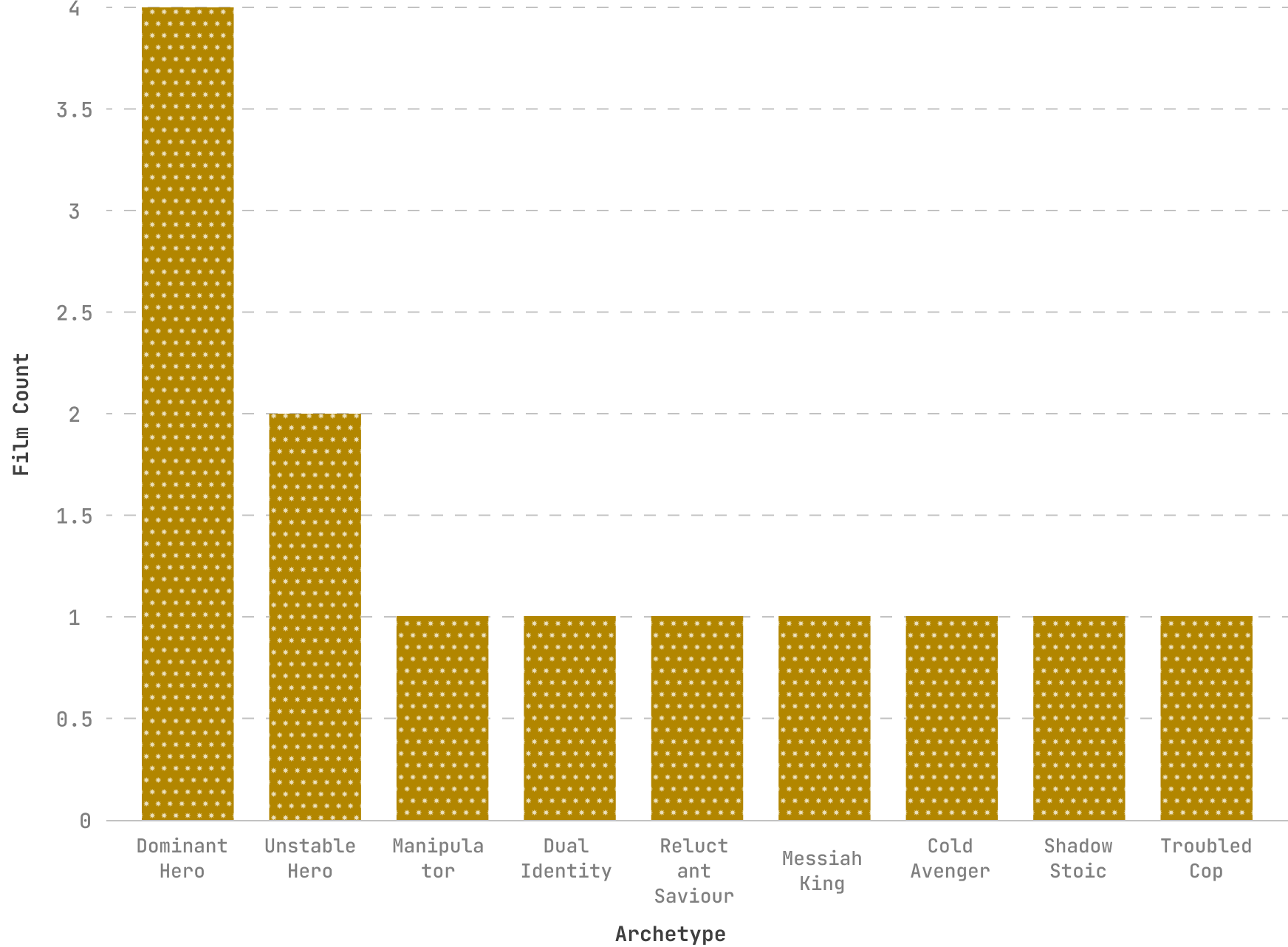
Introduced a custom schematic coding framework to map protagonist archetypes, narrative arcs, and the cinematic techiniques used to aestheticize violence. This framework identified 9 recurring anti-hero archetypes and tracked how moral justification, visual style (e.g., slow-motion, colour grading), and audio cues (e.g., heroic scoring) worked together to frame aggression as aspirational.
Enabled cross-film comparison, revealing consistent patterns in how violence is contextualized and normalized across genres and regions.
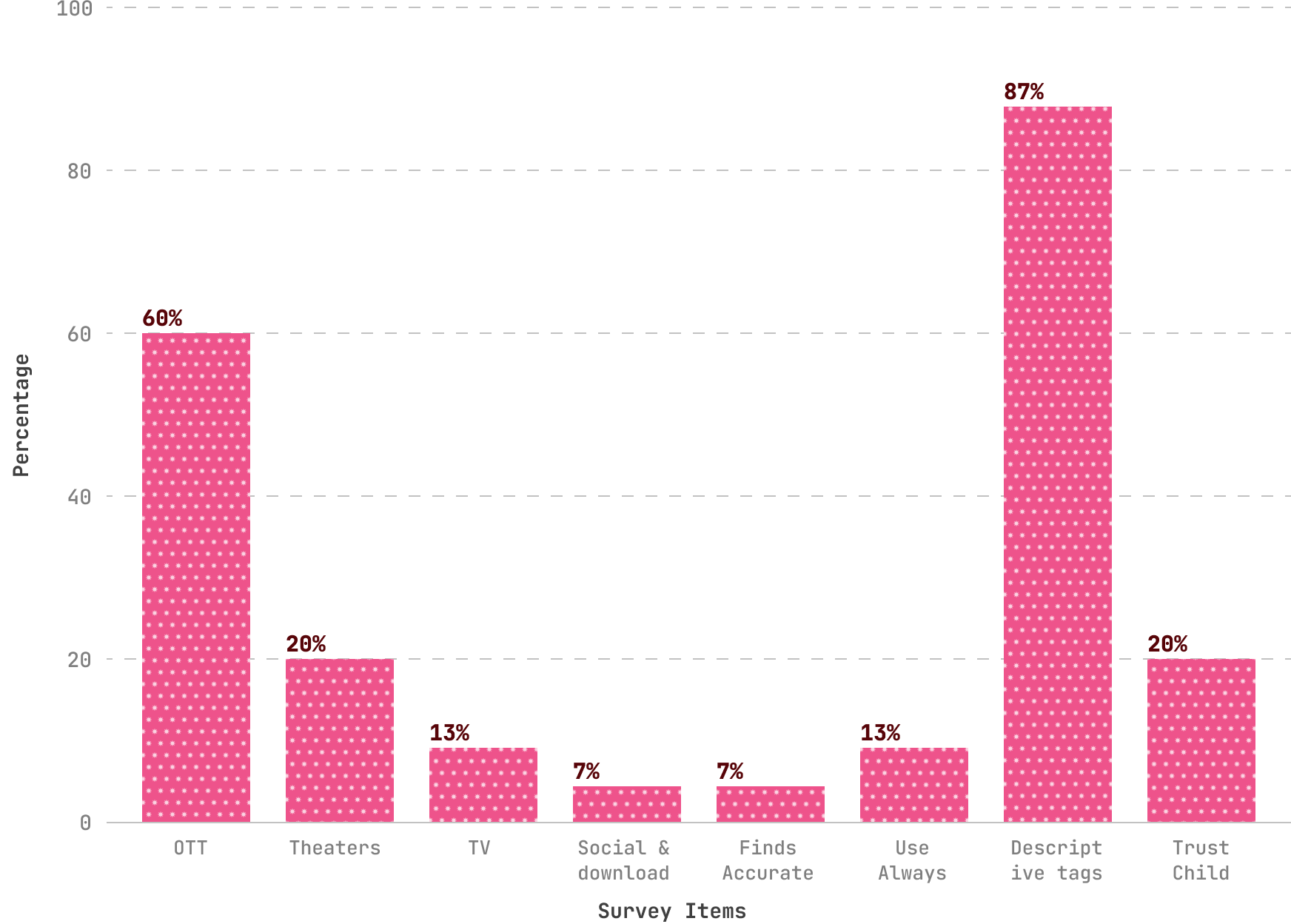
Surveyed 15 participants across 18 to 60 age groups. Focused on awareness, trust, and behavioural use of CBFC ratings.
*Note: While the survey sample (N=15) is modest and cannot be generalized statistically, it was designed as an exploratory probe to complement the broader content analysis and literature review. Triangulating across methods allowed me to balance depth (film coding, theory application) with audience perspective, even if the survey itself represents a small, primarily urban cohort.
Research & Discovery
Studying how violent media influences audiences especially in a country where cinema is a cultural force wasn’t as simple as asking, “Hey, do you think films influence you?” Most people don’t believe they are influenced, even when evidence points otherwise.
To understand the gap between awareness and action, I explored the issue from multiple angles: analysing blockbuster films, and grounding findings in decades of media-effects research. The result was a clear picture of why India’s content rating system fails to guide viewing choices and how cinematic portrayals of violence can subtly shape attitudes.
Some participants had never noticed ratings before; only 1 of 15 respondents knew about newer categories like UA 7+, UA 13+, and UA 16+.
Just 7% of participants believed CBFC ratings were accurate, and only 20% considered them reliable for decision-making.
Age bands provide no information about the type or intensity of potentially harmful scenes, meaning two “UA” films can have entirely different psychological impacts.
Literature and survey data confirm that younger viewers are more likely to adopt behaviours from admired on-screen figures, especially when aggression is rewarded or portrayed as justified.
Content analysis of 13 films revealed 9 recurring anti-hero archetypes that glamorize aggression through slow-motion hero shots, mythic music, and moral justifications.
Ratings are inconsistently displayed across OTT, theatre, and promotional platforms, reducing their visibility at decision-making moments.
Solution
A redesigned CBFC rating ecosystem that bridges the awareness–action gap by making ratings transparent, descriptive, inclusive, and actionable across all media platforms.


Empowering by design
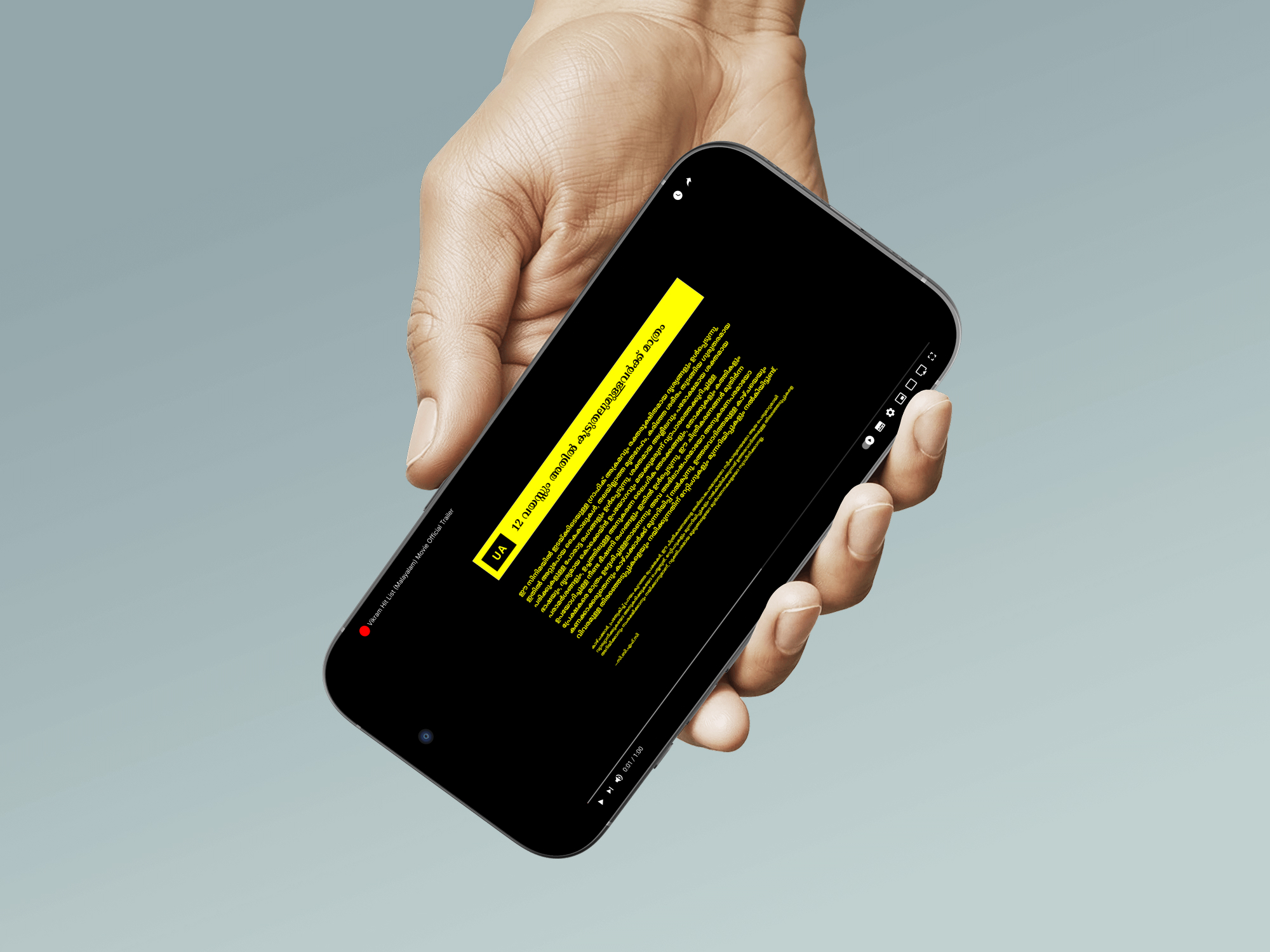
From the outset, I've committed to making film ratings and content guidance not just visible, but genuinely useful for audiences. This meant creating a system where ratings, descriptors, and advisories are consistent, easy to understand, and accessible in multiple languages across theatres, OTT platforms, posters, and trailers.
Fogg’s Model
To understand how these interventions actually change audience behaviour, I applied Fogg’s Behavioural Model (Motivation, Ability, and Prompt). This helped frame ratings not just as information, but as nudges that guide real-world choices.
Parents and young viewers are motivated by safety, clarity, and autonomy. By framing ratings as protective and empowering (rather than restrictive), we tap into these cultural and emotional drivers.
Simplified, multilingual, and visually consistent ratings reduce friction. Paired with descriptive warnings and parental controls, they make responsible viewing both easy and practical.
Nudges appear at the right moments: prominent labels beside posters and thumbnails, non-skippable pre-playback advisories, and interactive explainers built into OTT onboarding. Audience feedback polls serve as continuous prompts, showing that their voice shapes the system.
From Gatekeeper to Guide
In this model, the CBFC evolves from a statutory gatekeeper into a transparent, participatory, and empowering guidance system. Ratings stop being hidden fine print and instead act as active educational tools.
For viewers, it means informed choices and safer, developmentally appropriate media exposure.
For parents and educators, it provides practical scaffolding to co-view, mediate, and discuss challenging content.
For filmmakers, a transparent and descriptive system fosters trust and fairness. Instead of opaque or inconsistent classifications, clear criteria and content descriptors reduce the risk of misclassification and minimize disputes with the CBFC. Transparency also helps mitigate backlash, as audiences understand why a film carries a particular rating rather than assuming bias or censorship.
For directors and producers, this clarity provides a safeguard against reputational harm, streamlines the certification process, and aligns creative choices with audience expectations without stifling artistic expression. Over time, such reforms can shift the relationship between filmmakers and regulators from adversarial to collaborative where ratings are seen not as obstacles, but as tools that build audience trust.
Media Literacy Curriculum Development for Indian Youth
Indian youth are among the world’s largest consumers of cinema and OTT media, yet existing CBFC ratings fail to guide young viewers effectively. Research shows that without structured media education, children and adolescents are at risk of normalizing violence, toxic gender roles, and risky behaviors depicted in films.
I designed a comprehensive curriculum framework that integrates with Indian schools (CBSE/NCERT) and global standards (UNESCO Media Literacy). The framework uses interactive explainers, infographics, and multilingual content to scaffold media literacy from early childhood to late adolescence.
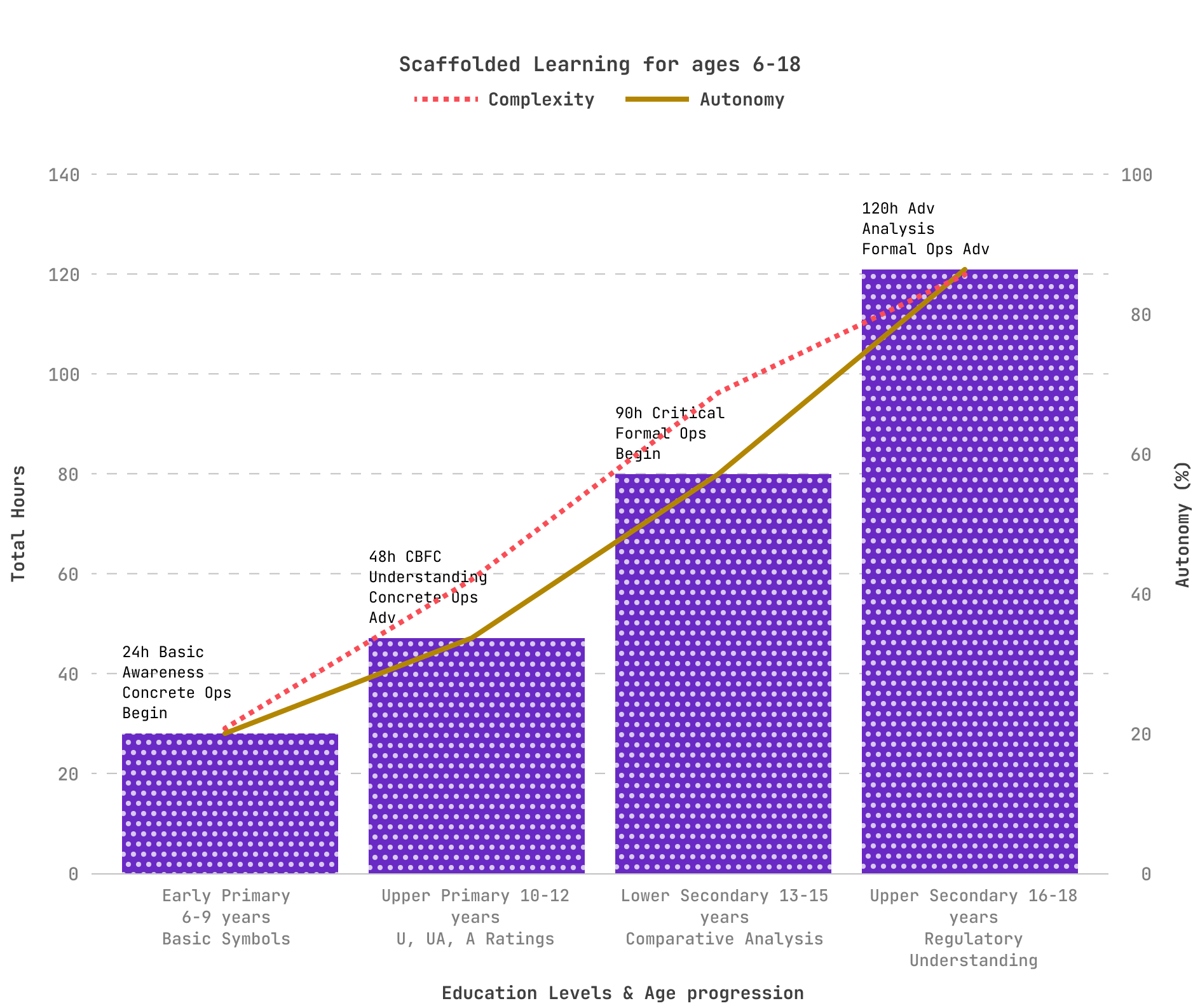
I divided the curriculum into four developmental stages, aligned with Piaget’s cognitive development model. This four-tier age group structure (6-9, 10-12, 13-15, and 16-18 years) offers optimal cognitive alignment while the multilingual implementation strategy ensures accessibility across India's diverse linguistic landscape.

Learning the difference between “real vs. pretend.” Symbols and simple rating icons.
During this concrete operational stage beginning, children develop the ability to think logically about concrete objects and events. The curriculum focuses on basic media symbol recognition, distinguishing between real and pretend content, and establishing foundational safety awareness. This aligns with UNESCO's emphasis on starting media education early and supports the Google-NCERT Digital Citizenship framework implemented across Indian schools.
Introduction to CBFC ratings and content warnings. Building awareness of “age-appropriate” content.
As children advance in concrete operational thinking, they can handle more sophisticated classification systems. This level introduces CBFC rating understanding and content descriptor analysis, building on India's existing mass media literacy initiatives while developing critical thinking about age-appropriate content consumption.
Critical engagement with media effects, peer influence, and social media literacy.
The transition to formal operational thinking enables abstract reasoning about media influence and peer dynamics. This curriculum level addresses critical engagement with media effects and develops digital citizenship skills essential for navigating social media responsibly.
Advanced analysis of film narratives, Fogg Behaviour Model application, and policy-level awareness.
Advanced formal operational capabilities support sophisticated analysis of media narratives, behavioral psychology applications (including Fogg Model implementation), and policy-level thinking about media regulation and social responsibility.
Outcomes (Projected)
If descriptors, advisories, and consistent UI display were implemented, audience trust in CBFC ratings could plausibly rise from today’s ~13% baseline toward majority levels (e.g., 50–60%), as indicated by analogous reforms in the UK and US. Post-viewing audience surveys would help validate this trend.
Seamless PIN/biometric locks and pre-playback warnings could reasonably increase parental feature adoption by 2–3x on OTT platforms, based on uptake rates in international contexts.
Integrating a structured media literacy curriculum into schools has the potential to reduce “blind viewing” among ages 10–16 by an estimated 30–40%, depending on implementation scale and teacher engagement.
With standard descriptors and transparent governance, India’s classification framework could approach parity with BBFC (UK) and MPA (US) standards within 5 years, positioning CBFC as a trusted guidance body rather than a censor.
Reflection
Learned the limits of being a single researcher without inter-rater reliability, humility and transparency were key, yet triangulation across survey, content analysis, and literature review gave my findings strong validation.
This Independent research taught me to double down on ethical rigor and methodological clarity to ensure credibility even without institutional backing.
Realized that international frameworks (BBFC, ACB, MPAA) cannot be copy-pasted into India cultural, linguistic, and demographic realities demand localized solutions.
For instance, OTT platforms often display rating advisories prominently in English, but not in regional interfaces, leading to unequal visibility across linguistic groups.
Similarly, parents in rural areas reported relying more on word-of-mouth or local cable operators than on official CBFC classifications, while urban parents were more likely to encounter ratings through streaming apps.
These differences underscored that language and access are not peripheral issues, but central design barriers. Multilingual and culturally appropriate descriptors are a necessity, not an afterthought. Rural–urban divides in media access reshaped my understanding of audience diversity and how different groups interpret the same content differently.
Saw firsthand the tensions between freedom of art, parental protection, commercial interests, and regulatory oversight all competing in the same ecosystem.
Parents often act as proxy decision-makers, meaning design must account for indirect users as much as direct ones.
Balancing expert frameworks vs. lived experience highlighted that what academics recommend doesn’t always match what audiences/parents actually need.
Understood that policy constraints directly shape design CBFC classifications ripple into OTT UX, theatre systems, and promotional media.
Learned that true reform requires systems thinking: media literacy cannot be solved by UI tweaks alone, but through educational, cultural, and regulatory layers working together.
Realized how difficult it is to capture implicit influence audiences don’t perceive how films shape their values. This demanded going beyond surveys to content analysis + theory-driven interpretation.
Saw the challenge of short-term vs. long-term effects: cinema’s influence on youth identity unfolds over years, not weeks, complicating measurement.
Moved from assumptions to evidence starting with a hunch about violent cinema, then systematically testing and refining it through rigorous methods.
Practiced academic storytelling for policy impact, turning raw findings into actionable recommendations for systemic change.

The Design Challenge
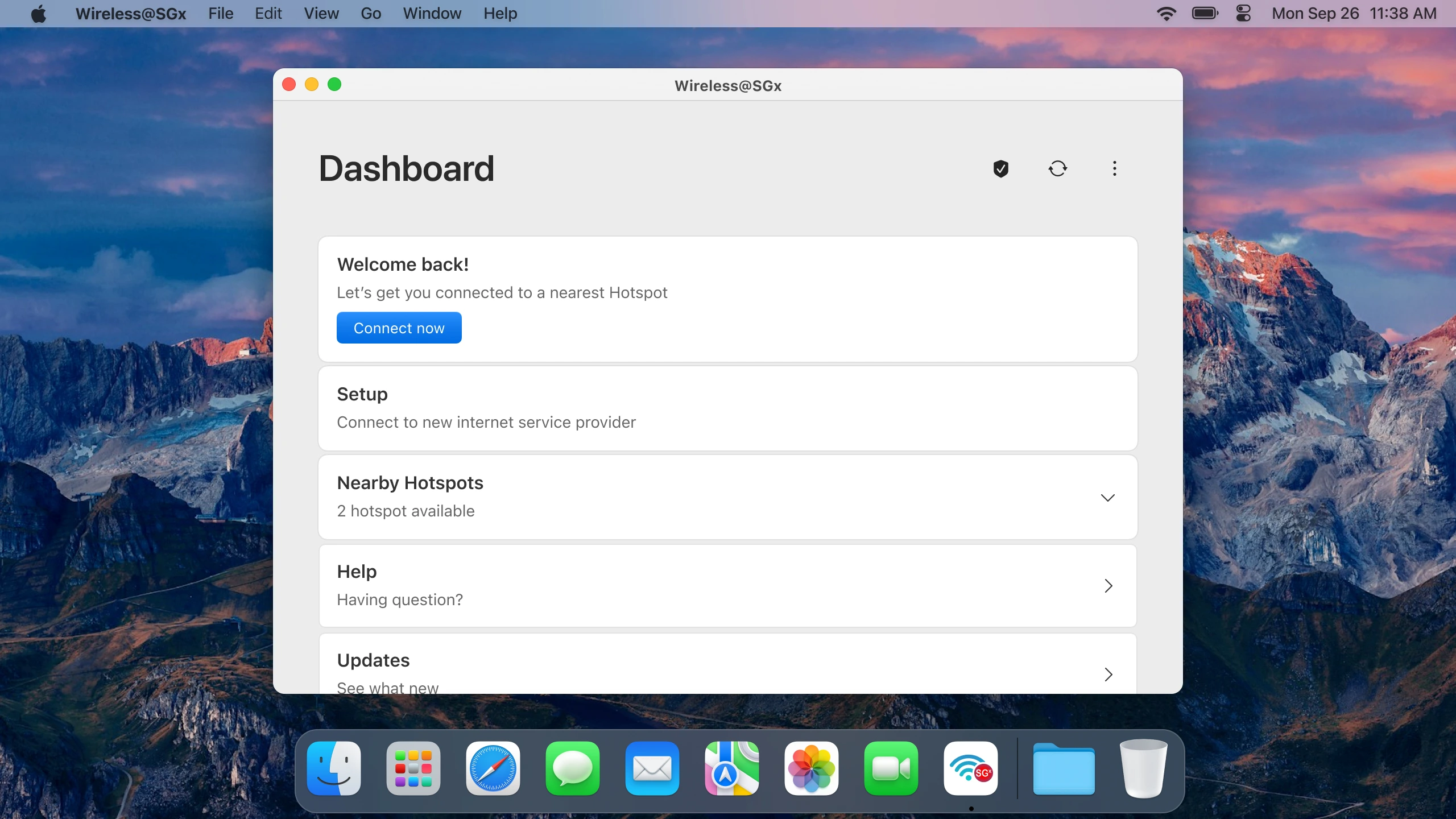
Wireless@SGx application was failing to deliver accessible public Wi-Fi for all citizens and visitors. The application demonstrated severe usability failures that threatened Singapore's digital inclusion objectives and international reputation for technological excellence.

Research Method
I applied a mixed-methods UX research methodology, combining quantitative surveys and qualitative interviews, followed by affinity mapping and assumption testing. This approach, allowed me to benchmark usability, synthesize insights into key problem areas, and reframe the service around accessibility, reliability, and inclusion.
Surveyed 485 respondents across iOS, Android, Windows, and macOS between Feb–August 2022. Collected metrics on setup completion rate, user satisfaction, Net Promoter Score, and average setup time.
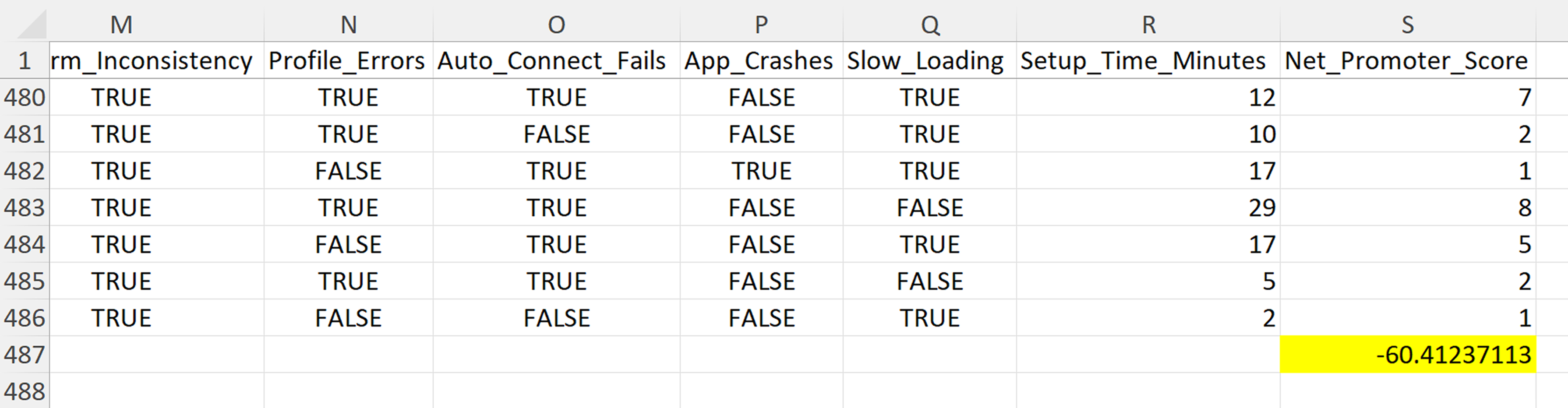
Note: The quantitative survey (N=485) achieves robust statistical significance with 95% confidence and ±4.4% margin of error, with all key findings showing p < 0.001 and large effect sizes. While statistically powerful for UX research standards and sufficient for detecting meaningful usability differences (≥15%), the survey was designed as comprehensive behavioural mapping to complement in-depth qualitative interviews and systematic thematic analysis. Triangulating across methods allowed balancing statistical precision (tight confidence intervals: ±3.9-4.3% for major findings) with rich contextual insights (cross-platform user experiences and accessibility barriers), though desktop platform subgroups represent smaller cohorts with wider confidence intervals (Windows n=38, ±15.9%; macOS n=33, ±17.1%).
I conducted 8 semi-structured interviews with participants aged 22–67, representing a mix of students, professionals, and seniors. These sessions explored lived experiences, contextual barriers, and accessibility challenges that could not be fully captured in survey data.
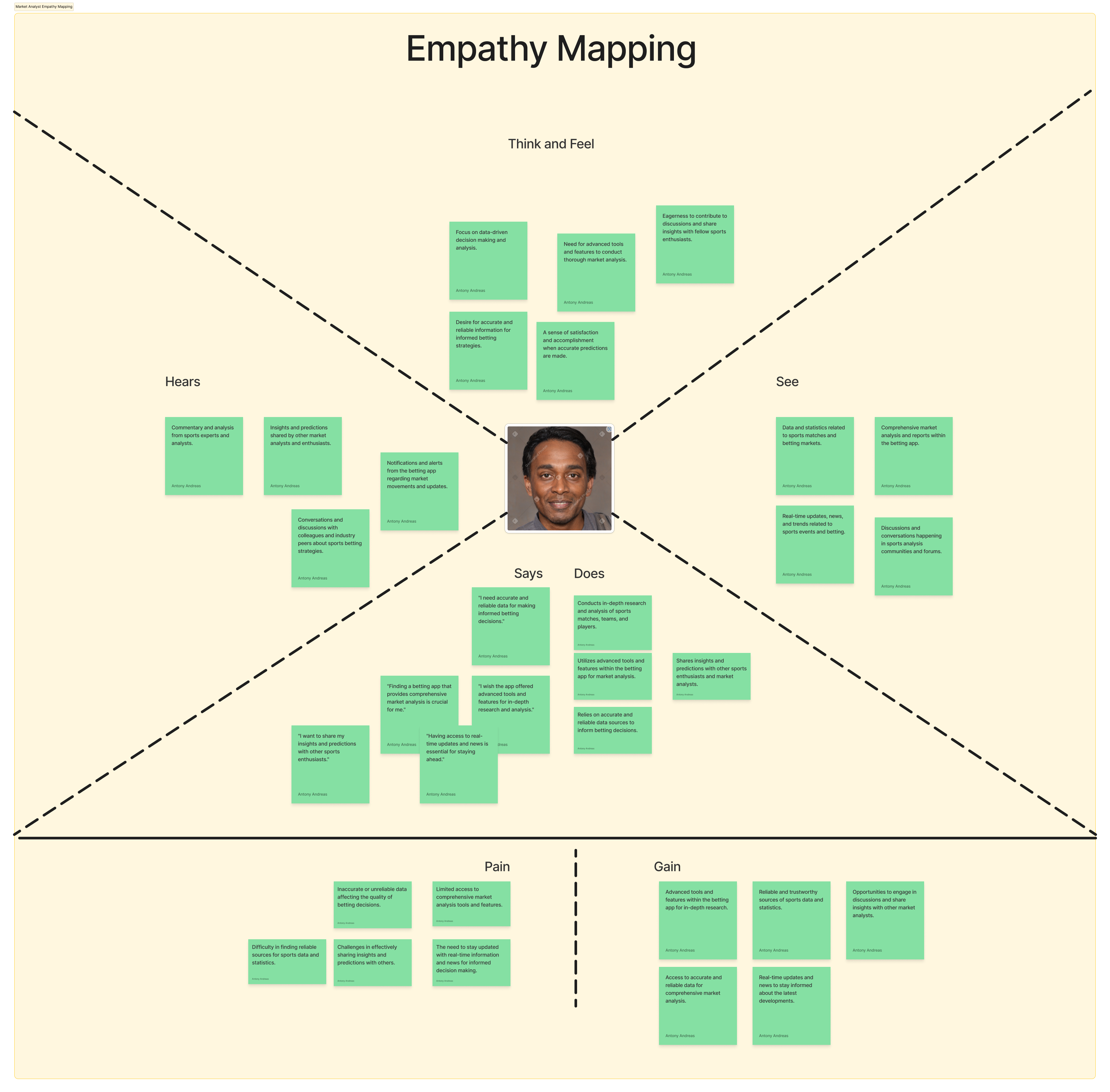
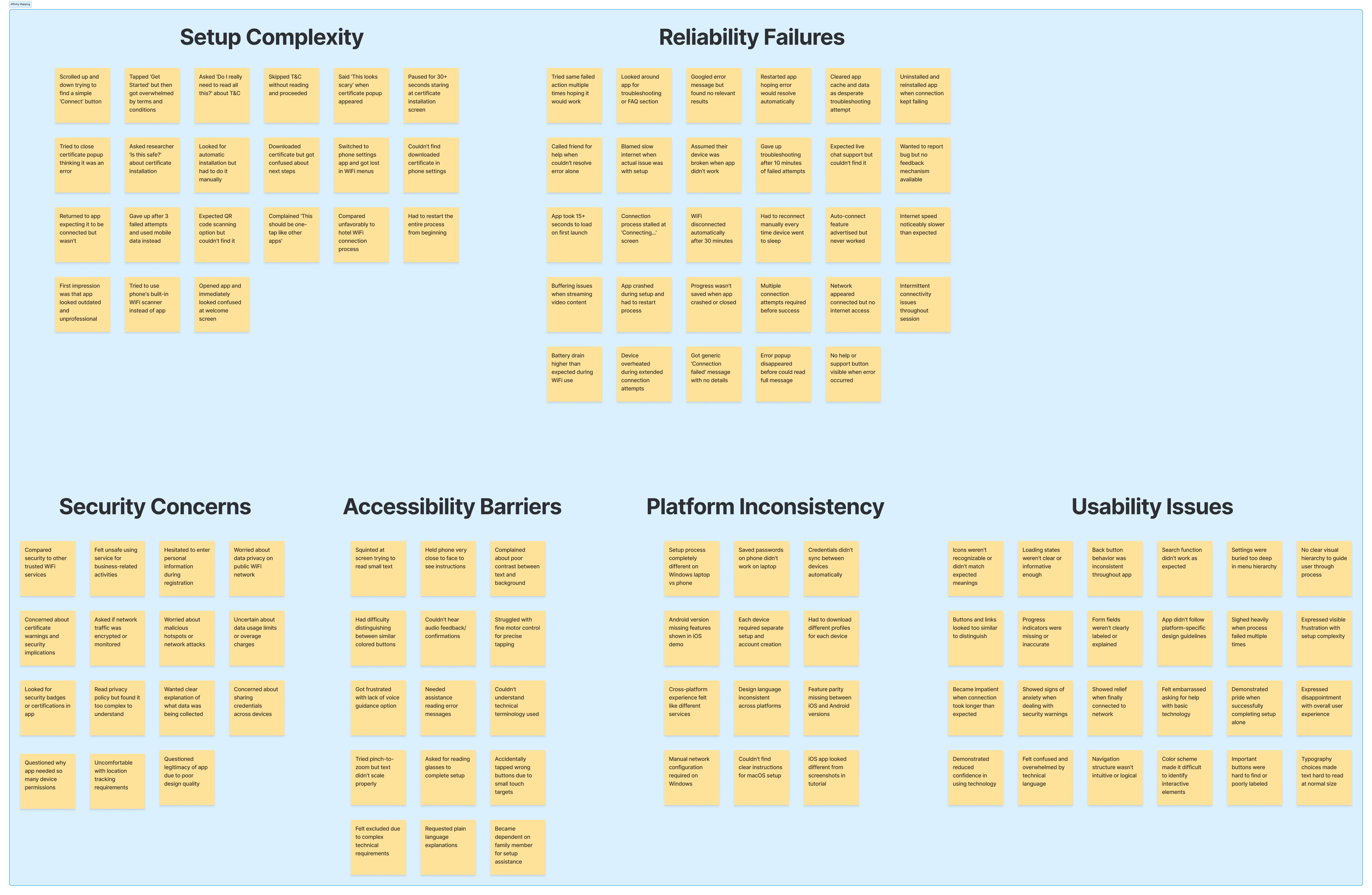
The interview data was then synthesized using affinity mapping, which clustered observations and quotes into emergent themes. This ensured that recurring issues were identified systematically and provided a structured foundation for defining critical user needs.
.png)
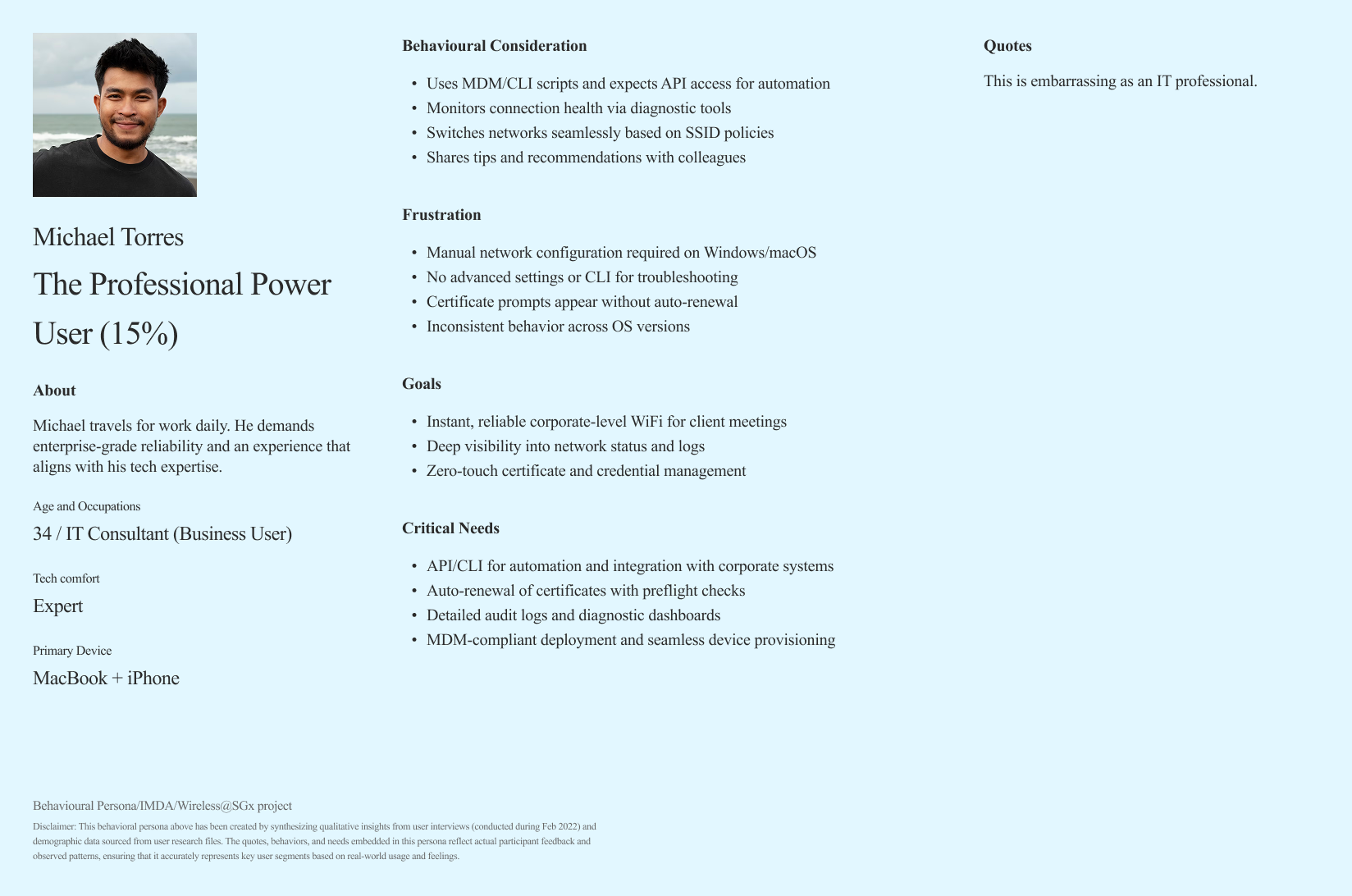
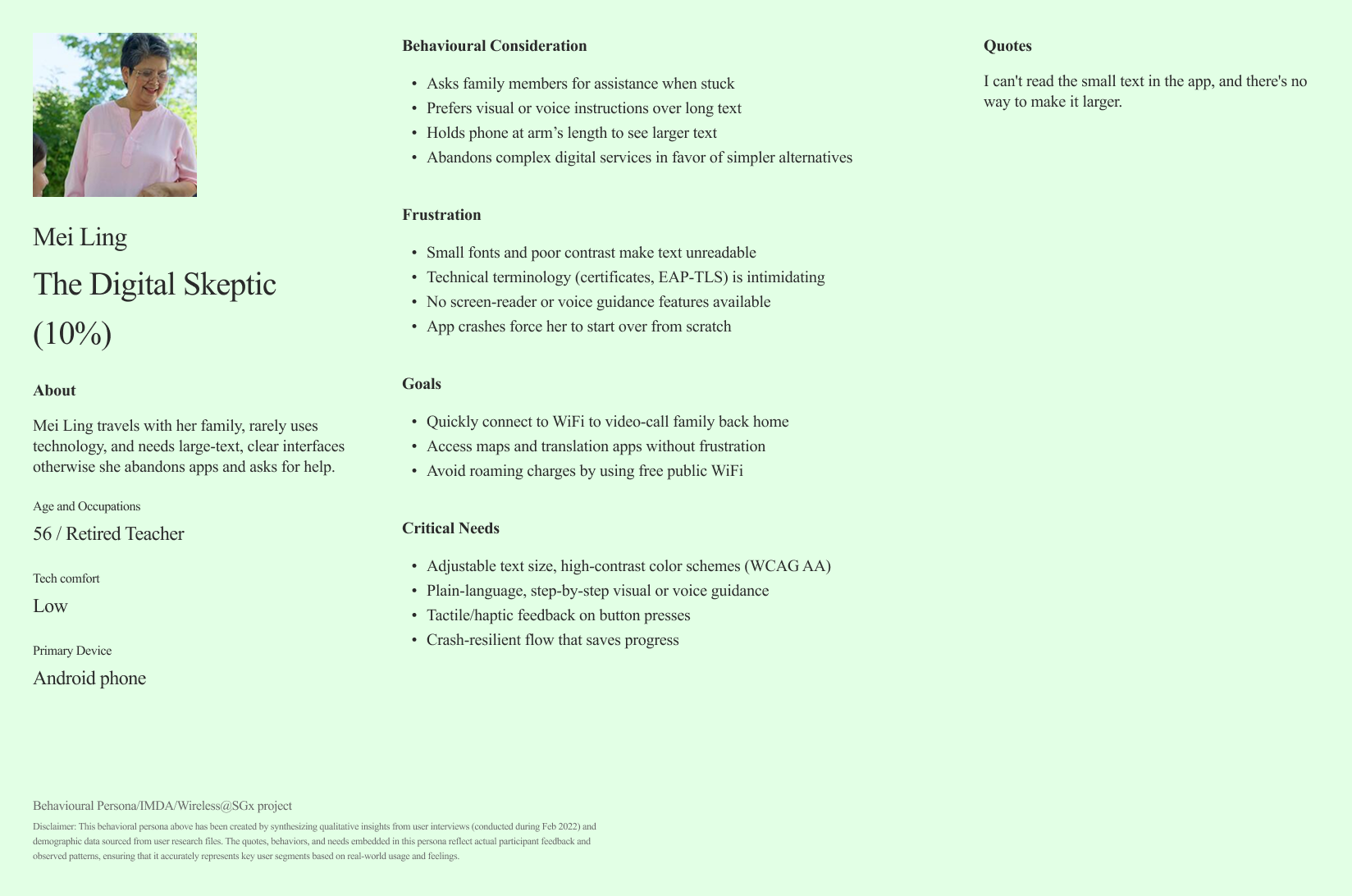


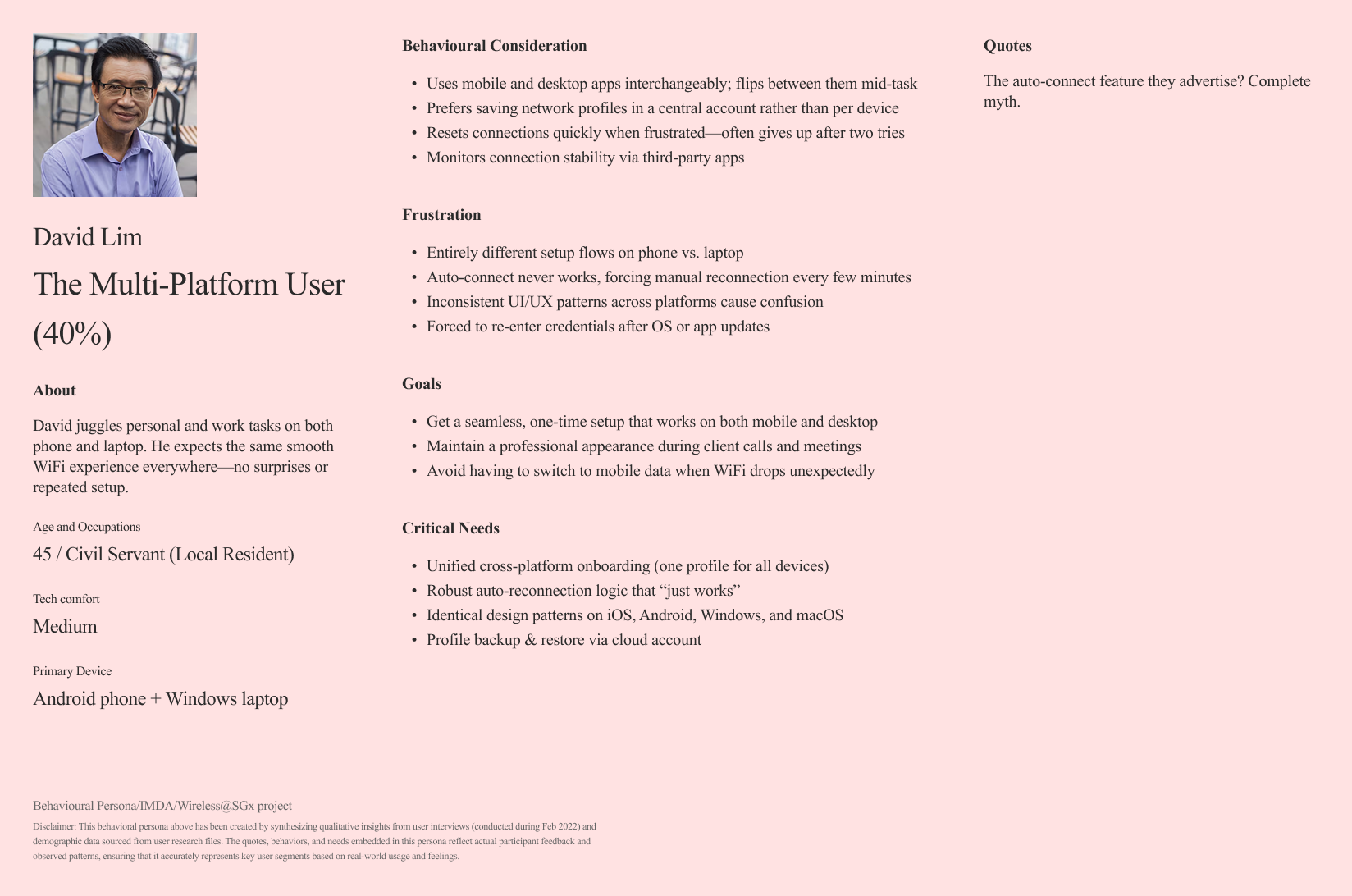
Finally, I ran an assumption-busting exercise by explicitly listing IMDA’s original design assumptions and systematically testing each against collected evidence. This step ensured the redesign strategy was based on user realities rather than unvalidated expectations.
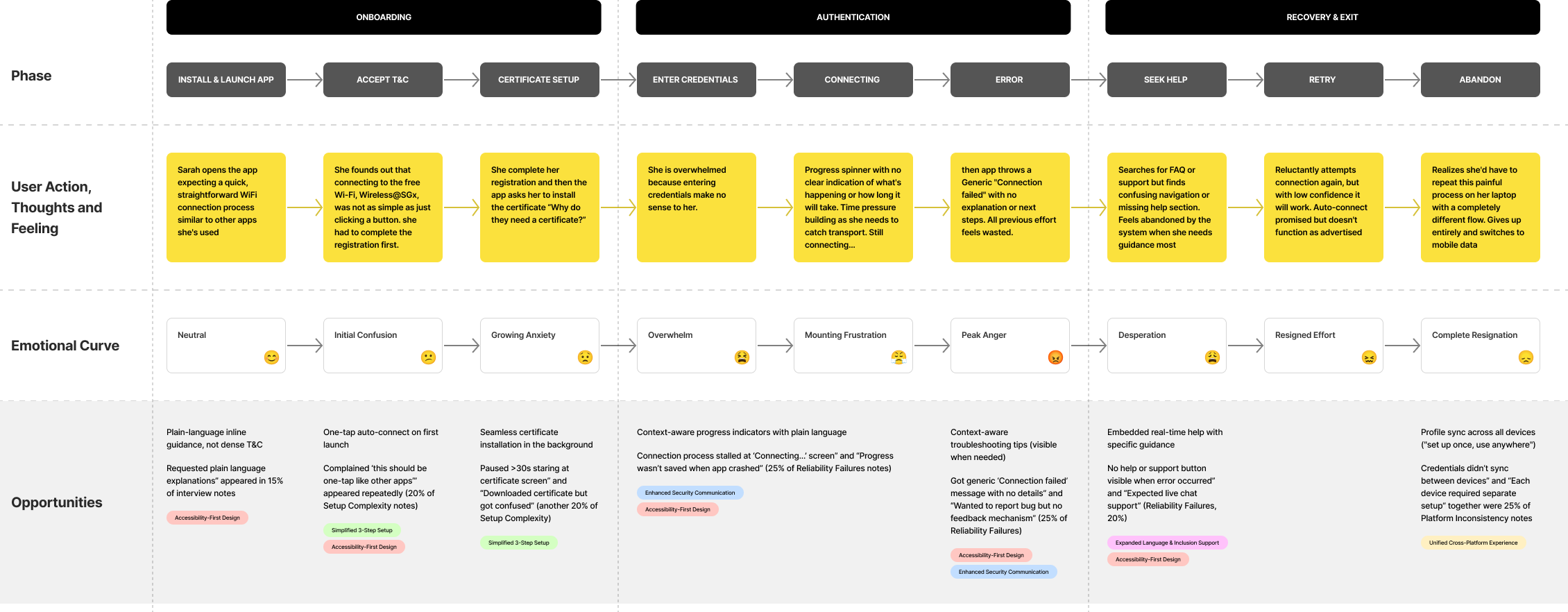
User Journey Mapping
.png)
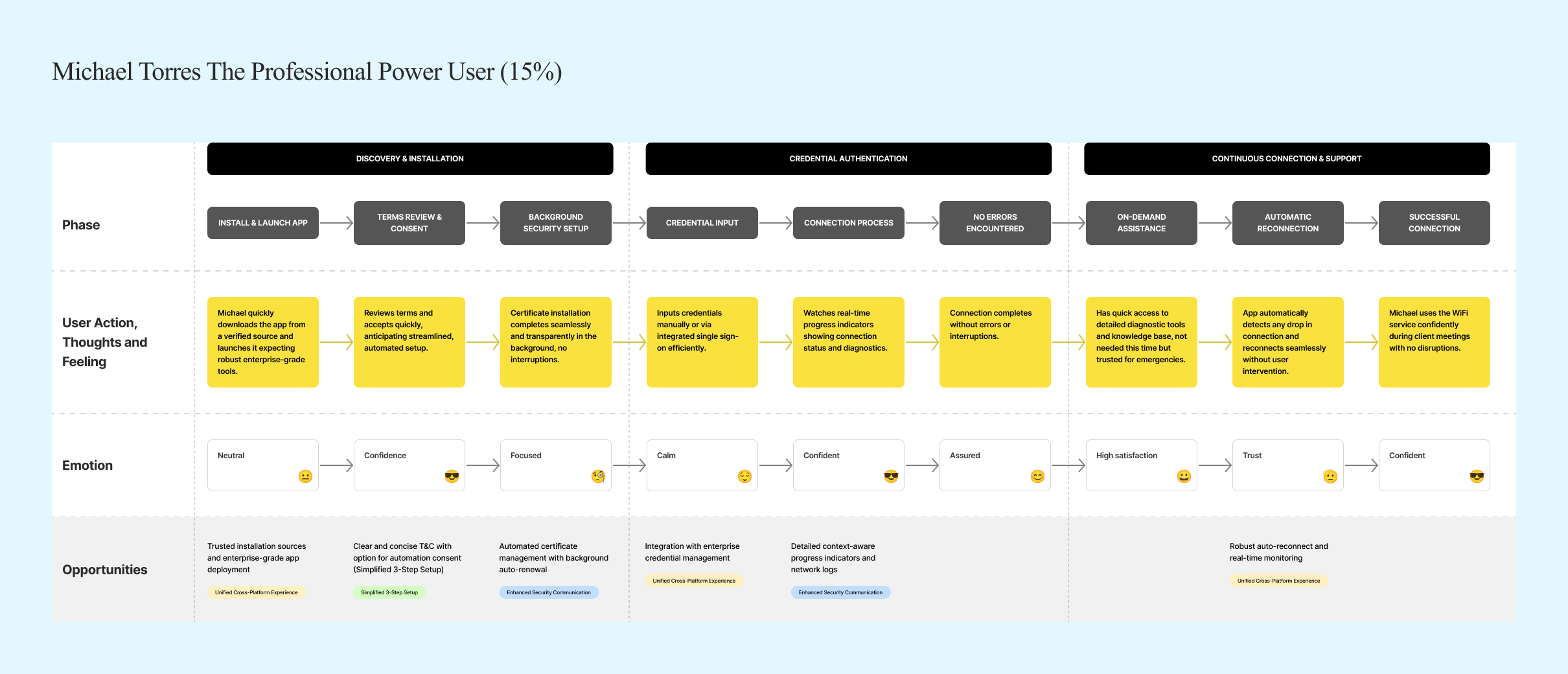
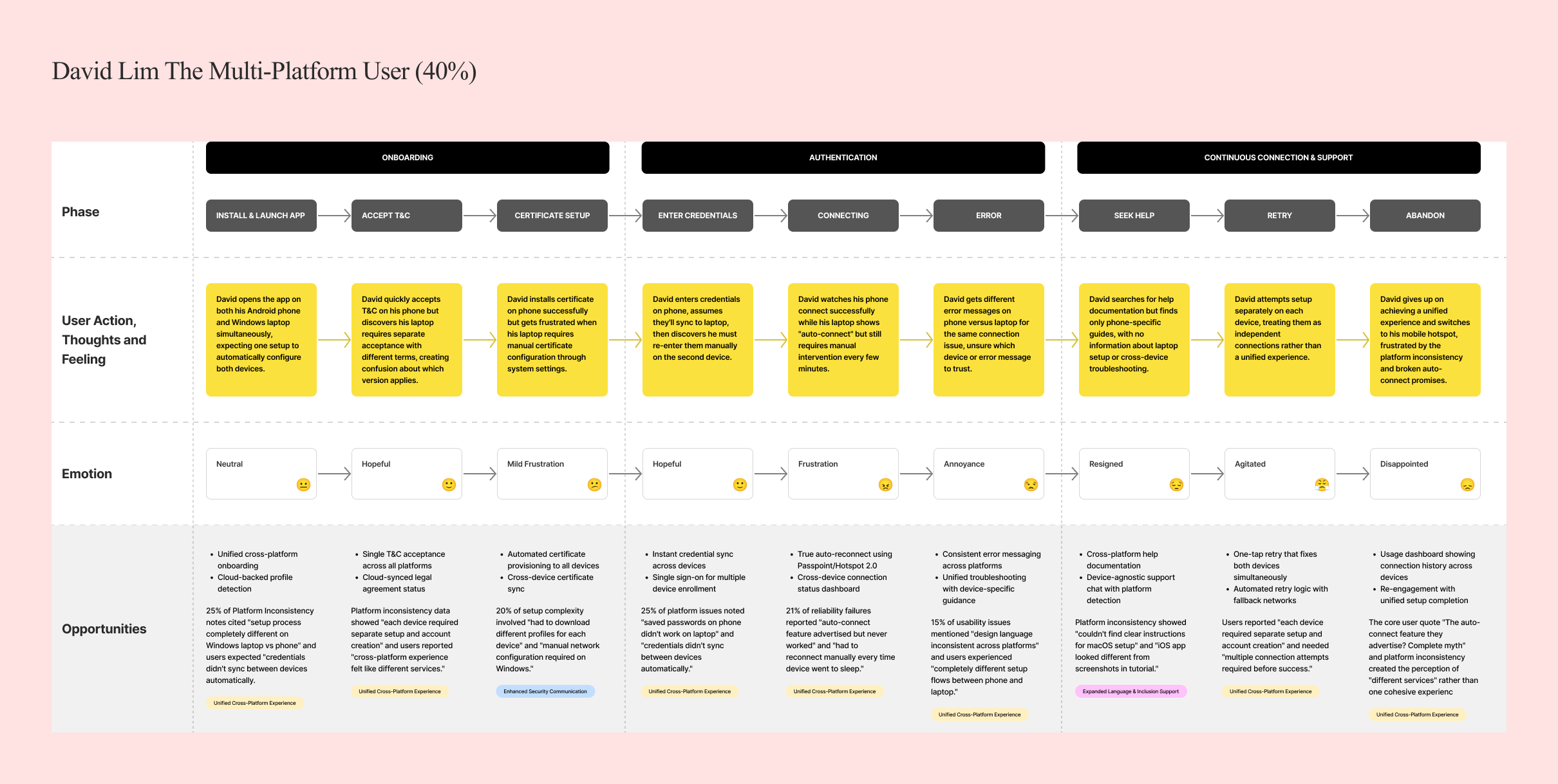
.png)
Findings
Our research revealed that the barriers to Wireless@SGx adoption were not technical glitches, but deep-rooted experience failures. Instead of being a seamless public utility, the service felt fragmented, outdated, and exclusionary.
On average, users faced 15+ steps involving technical jargon and certificate installations. The setup process took over 11 minutes, far exceeding the expected 2–3 minutes.
Each platform (iOS, Android, Windows, macOS) had a different flow, requiring users to “re-learn” the process. Lack of consistency created unnecessary cognitive load.
Outdated interface design (last refreshed in the 2010s). Tiny buttons, dense instructions, and jargon-heavy language made navigation frustrating.
Seniors struggled with small text and low contrast. Many depended on intergenerational help (e.g., asking children or grandchildren) just to get connected.
Frequent, unexplained disconnections. Auto-connect one of the app’s core promises rarely worked reliably.
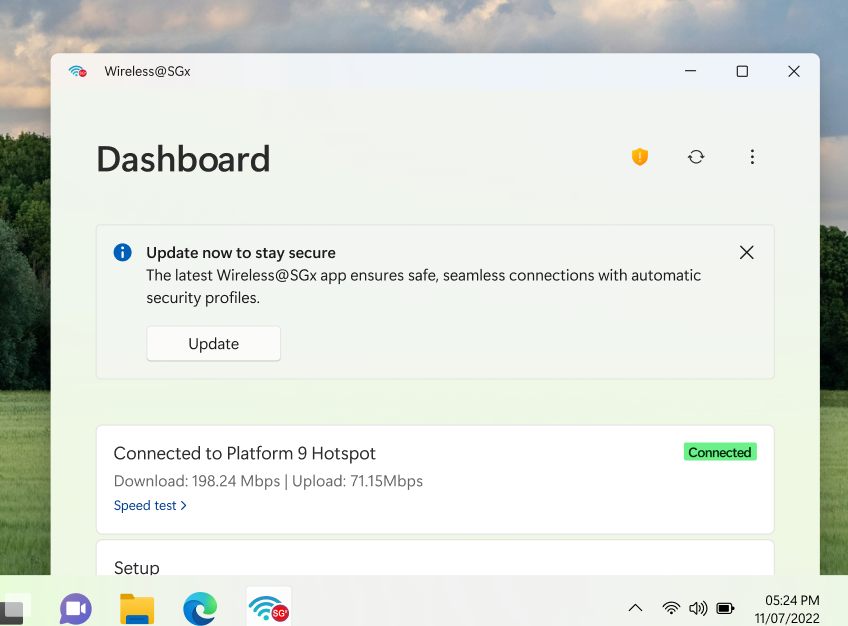
Manual credential copying introduced unnecessary friction and errors. Confusing certificate warnings reduced user trust in the service.
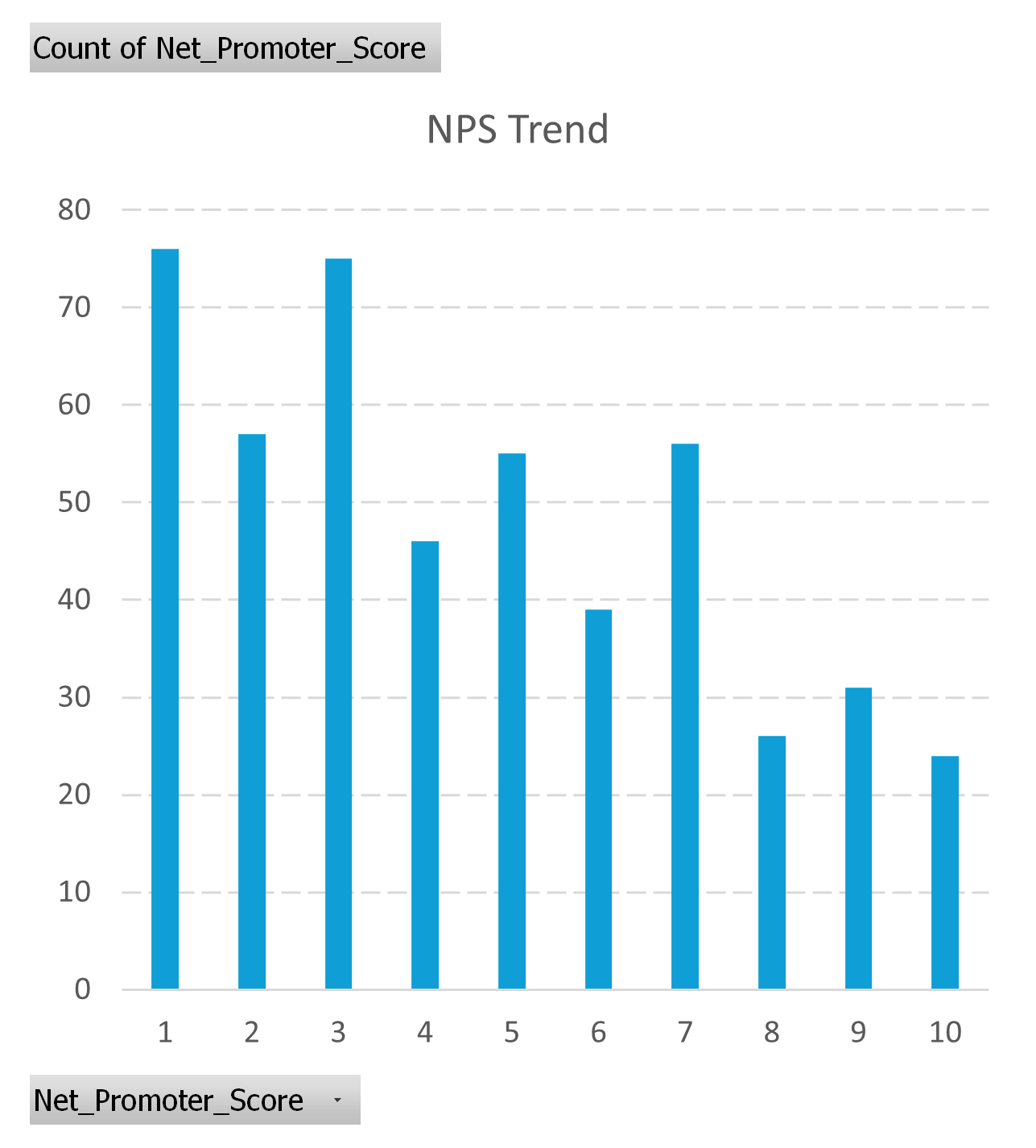
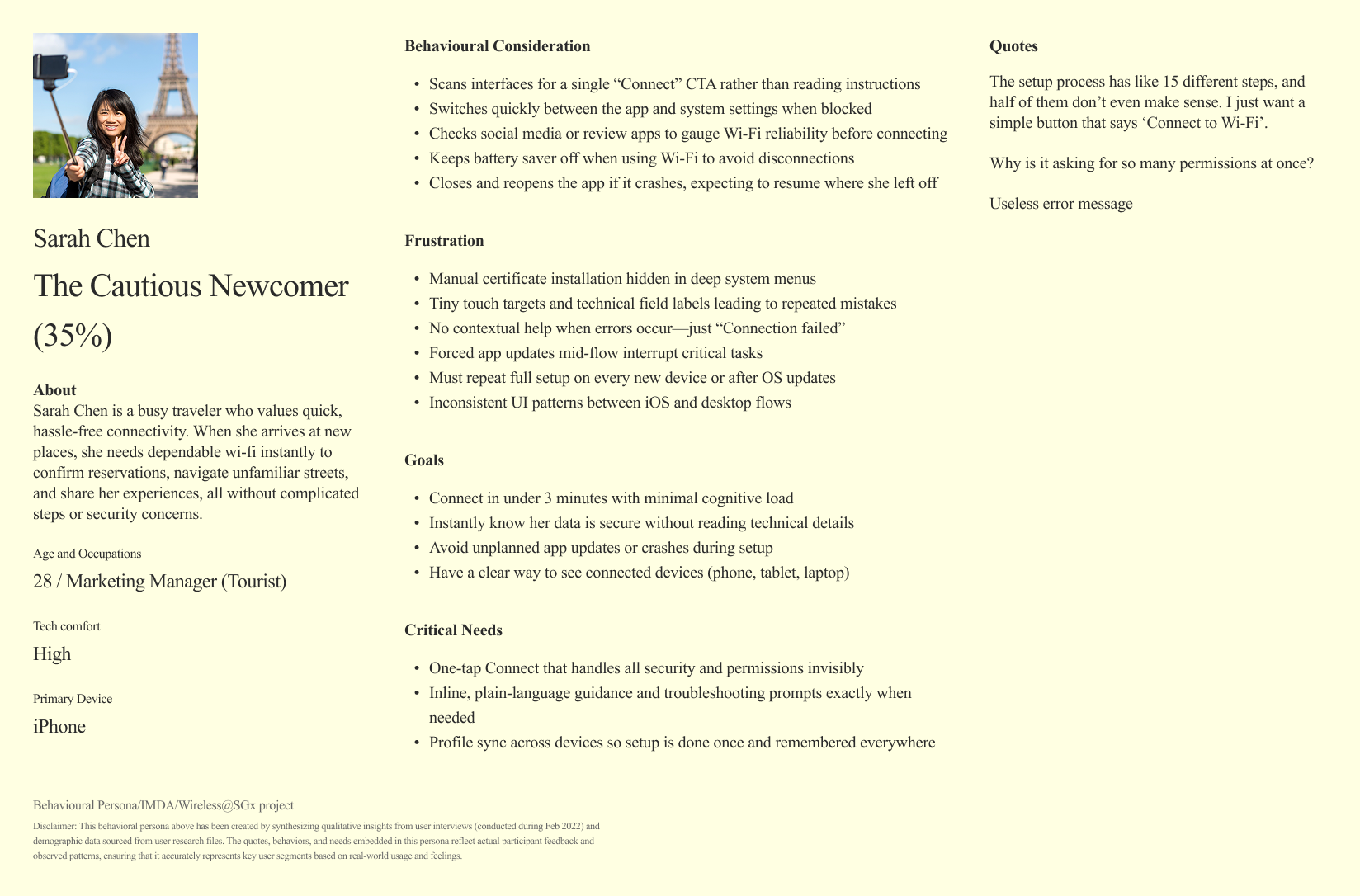

Design Approach
I approached this complex challenge through a systematic, user-centred design process focused on accessibility, consistency, and simplification.
Building on existing user research (485 person survey and 8 interviews), I analysed user pain points, behavioural patterns, and accessibility barriers. This revealed six critical themes: setup complexity, platform inconsistency, usability issues, accessibility barriers, reliability failures, and security concerns.
From these insights, I developed a design strategy anchored in three guiding principles: Accessibility-First Design, ensuring WCAG 2.1 AA compliance and inclusive features for all users; Cross-Platform Consistency, creating unified experiences across iOS, Android, Windows, and macOS to eliminate fragmentation; and Radical Simplification, reducing complexity by streamlining multi-step flows into intuitive, minimal processes without sacrificing functionality.
Mapped research insights into clear problem statements and design opportunities.
Established accessibility, consistency, and simplicity guidelines to anchor decision-making.
Restructured user flows to reduce steps and cognitive load.
Developed low-fidelity to high-fidelity prototypes across all platforms.
Built a cross-platform component library to ensure consistency and scalability.
Conducted iterative testing with seniors, students, and professionals to validate improvements.
Collaborated closely with developers to align build quality with design intent.
I mapped research insights into clear problem statements, defined accessibility, consistency, and simplicity as guiding principles, restructured user flows to reduce cognitive load, prototyped across platforms, built a cross-platform design system, validated improvements through iterative testing with diverse users, and collaborated with developers to ensure faithful implementation.
Solutions
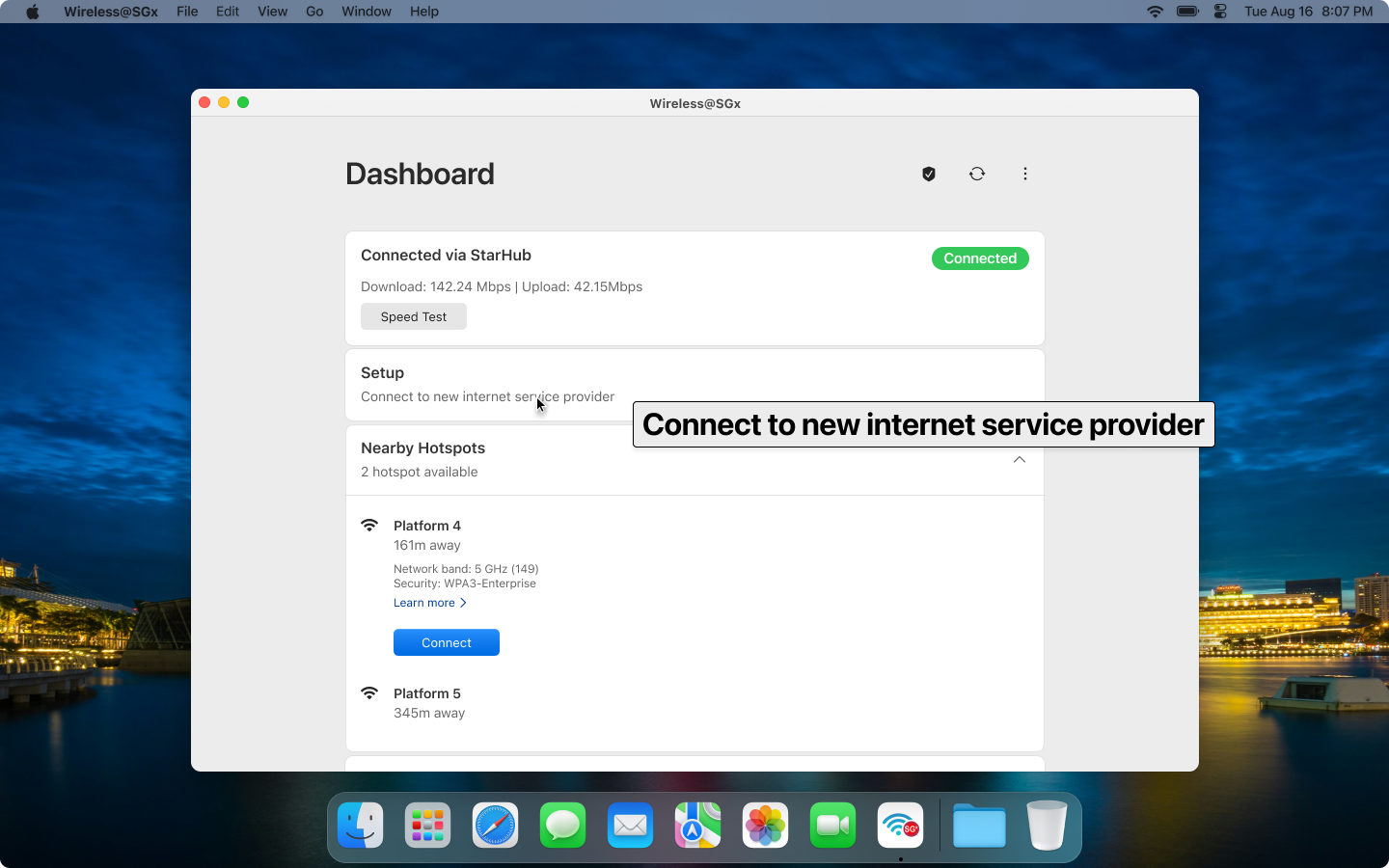
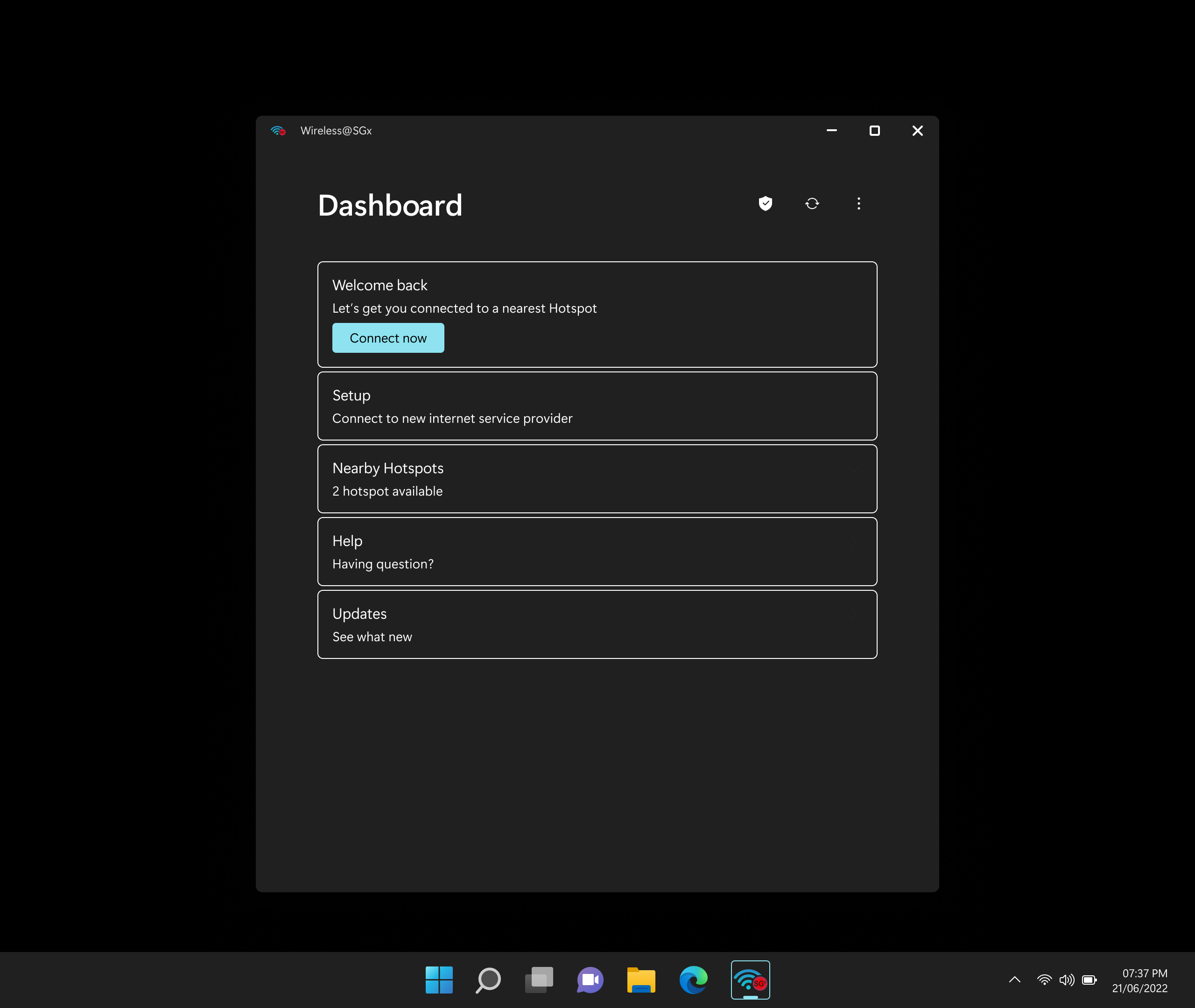
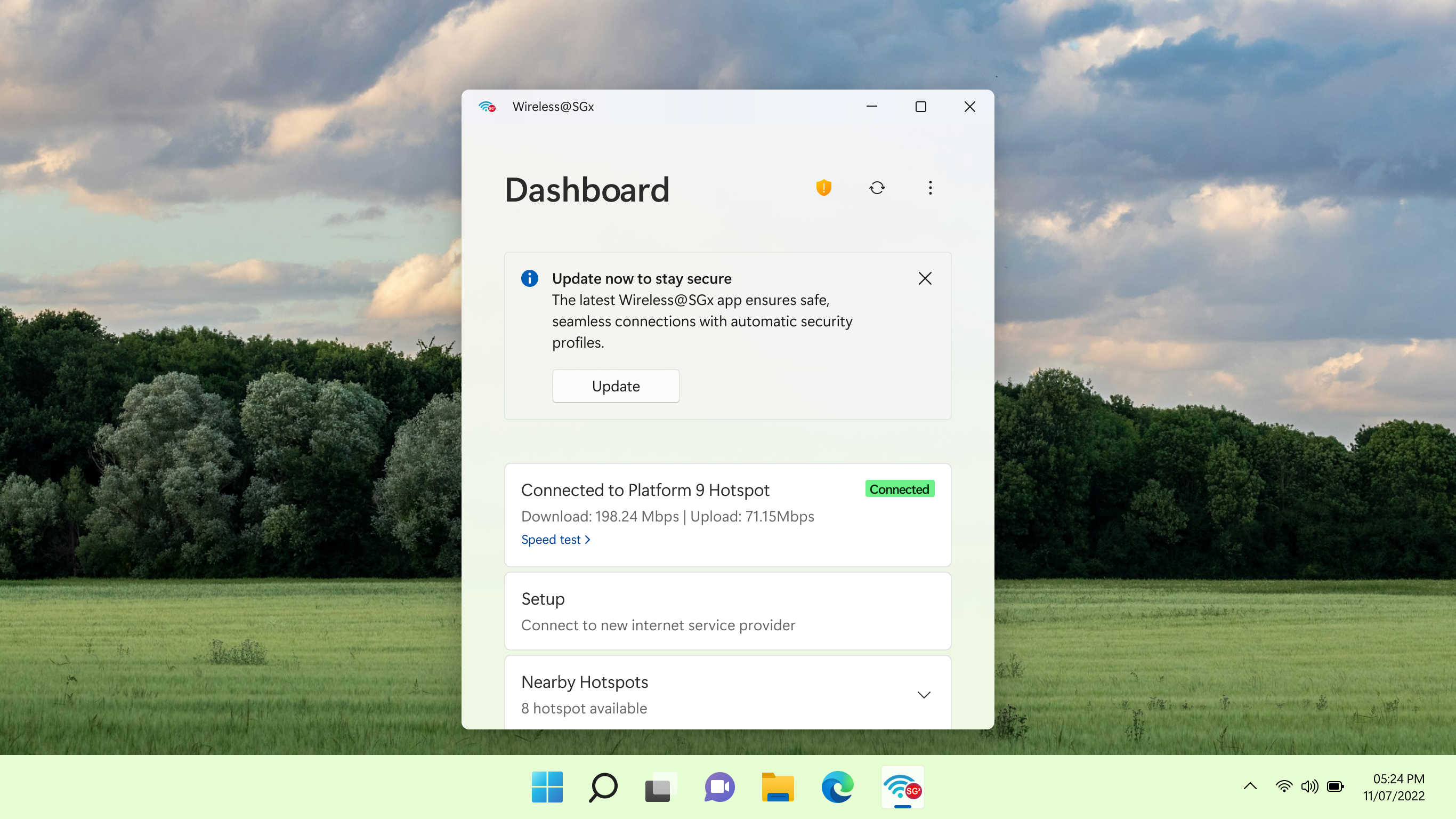
The solution I designed was a complete Wireless@SGx ecosystem redesign: transparent, unified, accessible, and actionable across all platforms.

Users reported overwhelming 15-step setup processes requiring technical knowledge and creating barriers across all platforms.
Reduced setup time from 11+ minutes to under 3minutes while increasing completion rates from 36.7% to 78%.

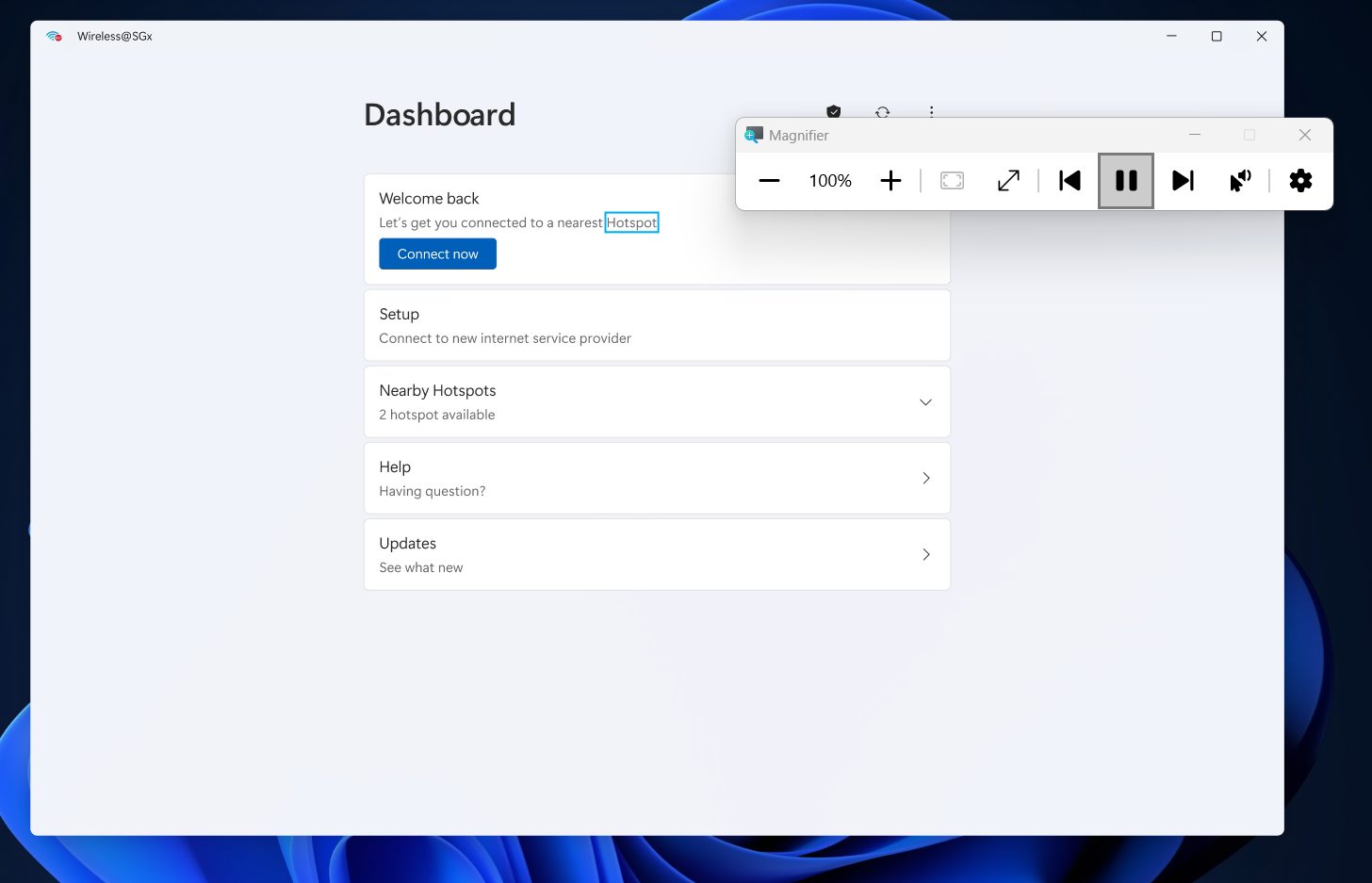
Seniors faced 80-100% confusion rates with no accessibility features available, creating systematic exclusion
Increased senior user success rates from under20% to over 75% while maintaining modern, appealing design for all users.


Simplified 3-Step Setup
Users reported overwhelming 15-step setup processes requiring technical knowledge and creating barriers across all platforms.
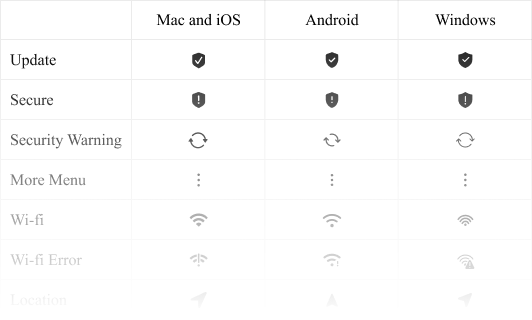
Consistent Profiles
Each platform (iOS, Android, Windows, macOS)provided different setup flows, forcing users to "re-learn" processes for each device.
I created a comprehensive design system ensuring95% feature parity across all platforms
Accessibility-First Design
Seniors faced 80-100% confusion rates with no accessibility features available, creating systematic exclusion
Core Solutions and Results
Accessibility-First Design
Unified Cross-Platform Experience
Simplified 3-Step Setup

Enhanced Security Communication
Expanded Language & Inclusion Support
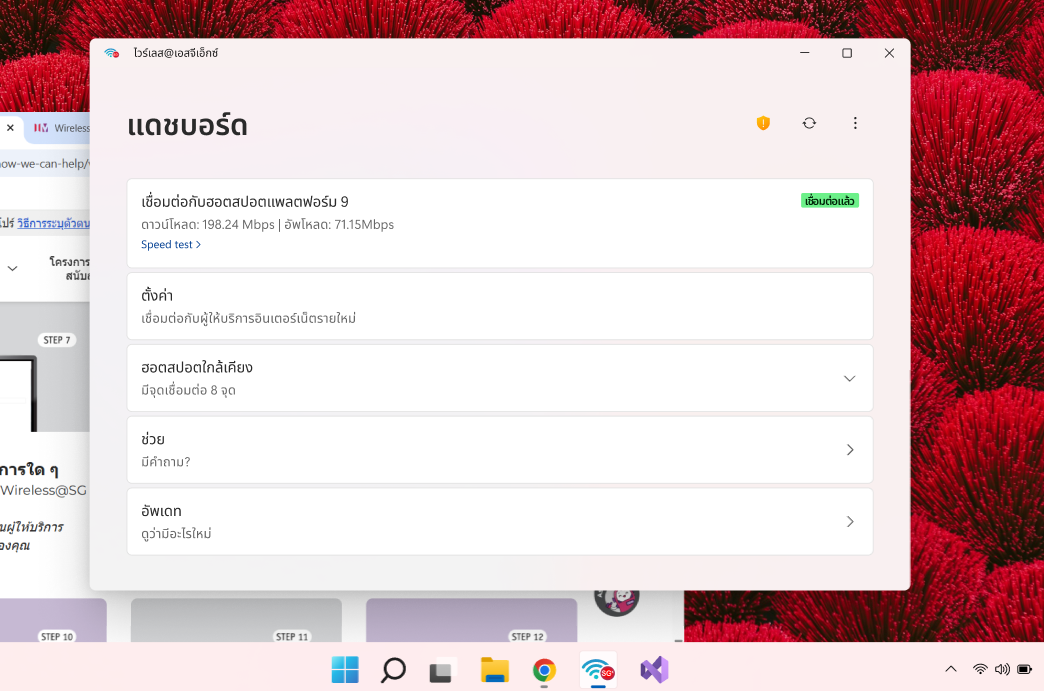
Mandatory Connection Advisories
Few other solutions
Expanded Language & Inclusion Support
Mandatory Connection Advisories
Outcomes
Increased from 36.7% to 78% within the first quarter post-launch, meeting the target set in the redesign roadmap.
Grew from 13% to 80% as measured by post‐launch surveys, reflecting major improvements in ease of use and perceived reliability.
Shifted from –60.4 to +15 within six months, indicating a positive user recommendation trend and restored trust in the service.
Reduced from 11.1 minutes to 2.7 minutes, surpassing the under-3-minute goal for streamlined onboarding.
Achieved 100% WCAG 2.1 AA compliance, enabling senior and low-vision user success rates to climb from 20% to 75% in usability tests.
Realized 95% feature parity across iOS, Android, Windows, and macOS, cutting cross-platform support tickets by 50% in the first release cycle.
Declined by 60% for setup-related issues thanks to embedded help prompts and clear error advisories, reducing operational load on support teams.
Reflection
Designing for seniors and users with disabilities pushed innovative solutions that benefited all users. The accessibility-first approach resulted in design patterns that improved usability across the board, proving that inclusive design creates better experiences for everyone.
The challenge of reducing 15 steps to 3 steps taught that true simplification requires understanding user goals rather than removing features. Smart defaults and progressive disclosure became powerful tools for managing complexity while maintaining functionality.
Creating unified experiences across platforms required deep understanding of each platform's design principles while maintaining brand consistency. This balance between platform conventions and unified experience became crucial for user trust and learning transfer.
Combining quantitative validation (n=485) with qualitative insights (n=8) provided comprehensive understanding that neither method could achieve alone. This approach enabled evidence-based design decisions with statistical confidence while capturing contextual user needs.
Singapore's diverse user base (locals, tourists, business travelers) required culturally sensitive design approaches that respected different technological expectations and usage contexts. This highlighted the importance of considering cultural factors in government digital services.
Working within government constraints while pushing for user-centered design required careful stakeholder management and evidence-based advocacy. Data-driven design decisions proved essential for gaining buy-in for comprehensive redesign.
Utilising design system for iOS, Android, Windows, and macOS balanced cross-platform consistency with native conventions, enabling rapid feature parity and reducing development overhead while maintaining performance on older devices through careful optimization.
Embedding comprehensive WCAG 2.1 AA accessibility features adjustable text sizes, high-contrast modes, and haptic feedback alongside performance tuning proved that inclusive design and efficient performance can coexist.
This scalable foundation and accessibility framework now serve as a blueprint for future government digital services, advancing Singapore’s Smart Nation goals by making public Wi-Fi accessible to all demographic segments, including seniors and users with disabilities.
Transforming NPS from –60.4 to positive territory and achieving 95% feature parity positions Wireless@SGx as a world-class, inclusive digital service and strengthens Singapore’s reputation as a leader in government UX design.









.jpg)
.jpg)